
Rose Society of South Australia
To encourage, improve, foster and extend the cultivation
and appreciation of the Rose
and appreciation of the Rose
As gardens get smaller and the number of people living in apartments increases, growing plants in containers has never been more popular. It’s a joy to have attractive living plants in our immediate residential environment, whether on patios, courtyards, paved areas or balconies. Roses in pots can be tough, healthy and reliable. Repeat flowering rose varieties bloom for most of the year, adding interest, colour and fragrance. We only need to follow a few basic rules to have beautiful roses.
Countries which have densely populated cities, such as Japan, India and some European examples have mastered the art of growing roses in pots.
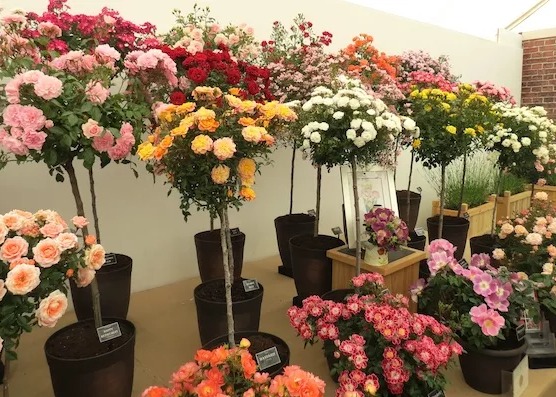
Here are a few basic rules.
1. We need a location which receives at least 5 to 6 hours sunlight each day. The advantage of growing a rose in a container is that you can shift it to ensure it is in the right position for sunlight or move it in extreme weather. Courtyards which have full sun can get very hot in summer, therefore it is advisable to provide some afternoon shade protection during the heat of summer.
2. Consequently, the second requirement is that the pot can be shifted. This can be achieved by having the pot on a low stand with wheels or to fit a sack-truck under it for easy relocation. Mark the side of the pot which faces north and when you relocate it ensure the pot is placed to face the sun in the same position.
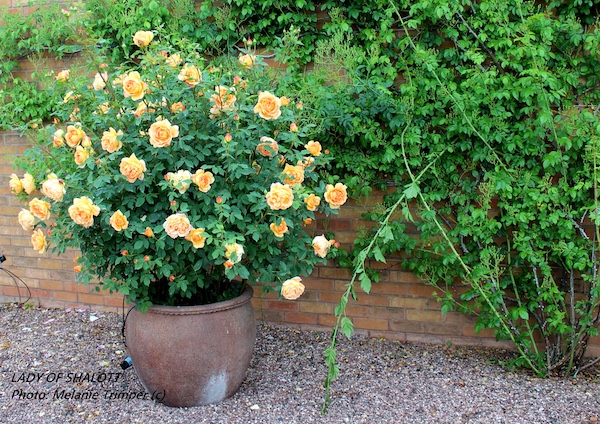
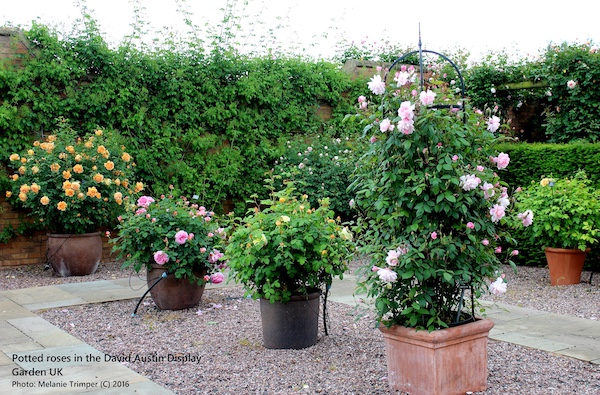
3. Another key element is container size – the bigger the better! As a general guide miniature roses, miniflora or patio roses need a minimum 10 litre container while a bush rose needs a minimum of 40 litres (at least 50cm wide and deep is recommended) giving roots the space they need to establish. Half wine barrels make excellent containers for roses but shifting or repotting roses grown in such a large container can be a challenge. A shallow layer of stones in the base helps drainage. Remember don’t plant in hot weather.
You can use traditional terracotta clay, concrete, porcelain or wood containers as they do not absorb heat like black plastic pots. Terracotta coloured plastic pots are a lightweight option. Also consider lightweight fibreclay pots and glazed pots. You can choose a colour theme and also seal the inside of pots with a sealer to preserve the surface.
4. The potting mixture must be a premium potting mix with the 5 ticks for Australian Standard certification. It should be free draining but retain moisture. Ask your local nursery to ensure you get the correct mixture. Roses should be repotted with new soil, when dormant, every 3 to 5 years. Roses have large root systems, so it’s ideal to re-pot into larger pots to prevent them becoming root bound.
5. Fertilising is another important element. The Rose Society recommends feeding the roots with a sprinkling of Neutrog Seamungus (soil conditioner) pellets. For established potted roses 50g per (8 inch) 200mm pot, and every 8-10 weeks throughout the growing season and Neutrog Sudden Impact for Roses fertiliser pellets lightly scratched into the top surface. (Also, Neutrog SIFR liquid fertiliser also works very well).
The small solid pellets break down slowly over 4 to 6 weeks constantly feeding the potted plant. They can then be replenished every 6 weeks. Be careful not to over fertilise, a little often is far more effective than large overdoses which can be harmful.
Alternatively, for pot feeding, Neutrog Strike Back for Orchids pellets have the advantage of a higher percentage of trace elements than Sudden Impact for Roses with only a slight variation in N.P.K. and very beneficial for potted plants.
An application of Neutrog GoGo Juice or Popul8 (a pro-biotic and soil improver) every 6 weeks also ensures the potting mix maintains an active mixture of live microbes for healthy plant growth, which helps to break down compost and fertiliser into digestible forms for the potted rose.
6. Correct watering is essential. It’s imperative that the pot remains moist and cannot be allowed to dry out completely. Water the pot deeply until water is seen to be freely draining through the holes at the base and morning is preferable. The drainage holes cannot be allowed to block up as roses hate ‘wet feet’. You can use pot feet or stands to ensure good drainage. If the container is the right size for the rose it will need watering 2 to 3 days per week in the summer and maybe daily during heatwaves. Watering can be reduced to once or twice per week in autumn and spring and weekly in winter if necessary.
7. The final point relates to pests and diseases. Potted roses can often get spider mite and to avoid this, thoroughly wet the foliage (both underneath and above) with a strong stream of water every 7 to 10 days. Similarly, aphids can be washed off or rubbed off the foliage. An occasional spray with Eco-oil or pest oil will control fungal problems and help with insect control.
So, which rose varieties are the best? Many roses are perfectly suited to growing in pots.
Generally, you should consider selecting varieties that have an even growth habit and perform well throughout the flowering season and do not require a huge amount of soil for a root system.
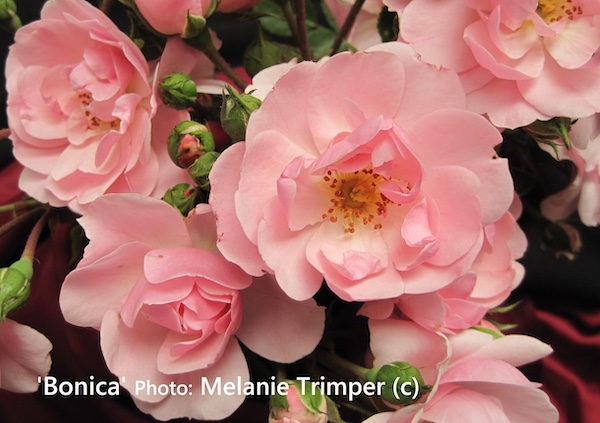

Some good rose varieties include shrub roses ‘Grace’, ‘Princess Anne’ and ‘Munstead Wood’ or smaller varieties like ‘The Fairy’ and ‘Bonica’.
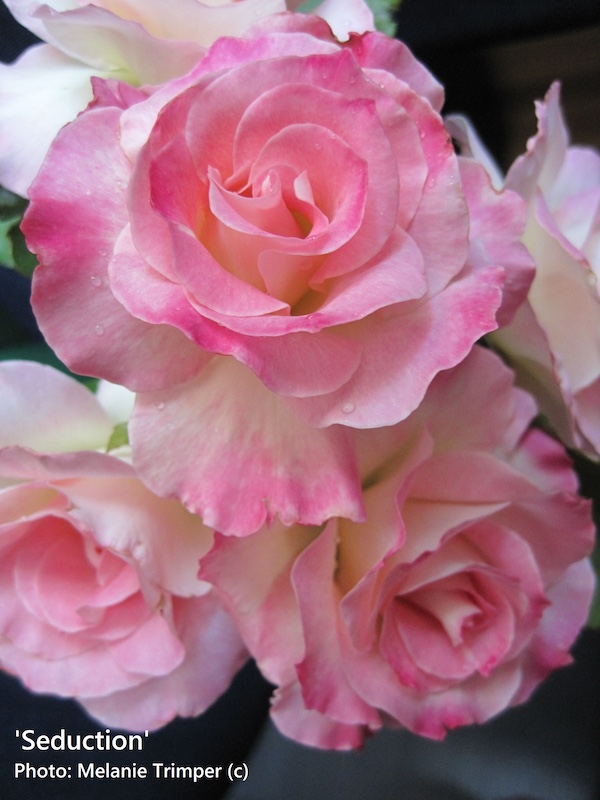
In big tubs, standard roses can be grown with annual flowering plants for colour. Good bush and standard roses for pots include: ‘Iceberg’, ‘Ebb Tide’, ‘Double Knockout’, ‘Seduction’, ‘Pope John Paul II’ and ‘The Golden Child’ just to name a few. Research neat compact roses for more varieties.
It is generally difficult to grow vigorous climbing roses in pots, with a trellis erected, especially when it’s time to re-pot.
Roses can also be grown as bonsai plants and the Japanese use roses in this way with very attractive results. They also train them to grow over frames to make superbly decorative feature plants as illustrated.
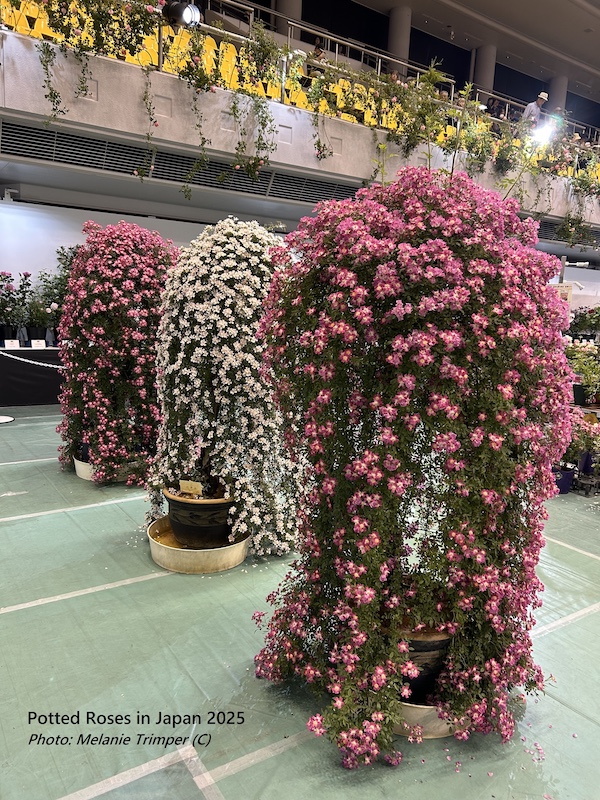
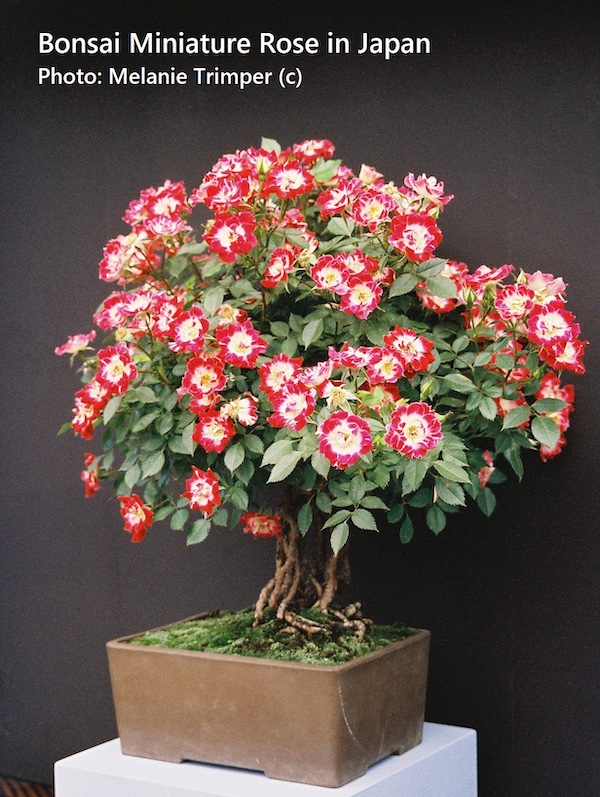
The lack of a traditional garden does not mean you can’t grow roses. Deadhead roses regularly to keep them looking attractive and encourage more blooms. If you have a courtyard or balcony – you can successfully grow potted roses. Enjoy your rose garden and may you be rewarded with many beautiful blooms.
Melanie Trimper
Member, HMAA (SA)
Member, Rose Society of South Australia